Pleomorphism & Live Blood Analysis: A Simple Guide for Clients
What is Pleomorphism?
Pleomorphism is the idea that microorganisms (like bacteria and fungi) can change form depending on their environment inside the body.
This is different from the more common Monomorphism (germ theory), which says each microorganism has only one form and causes specific diseases.
Key Historical Figures
Antoine Bechamp: Discovered tiny living elements called microzymas in all living things. He believed these could change into bacteria or fungi if the body's environment ("terrain") became unhealthy.
Claude Bernard: Emphasized the importance of the body's internal environment ("terrain") in health and disease.
Royal Raymond Rife: Built a special microscope and showed that viruses could change into fungi and bacteria.
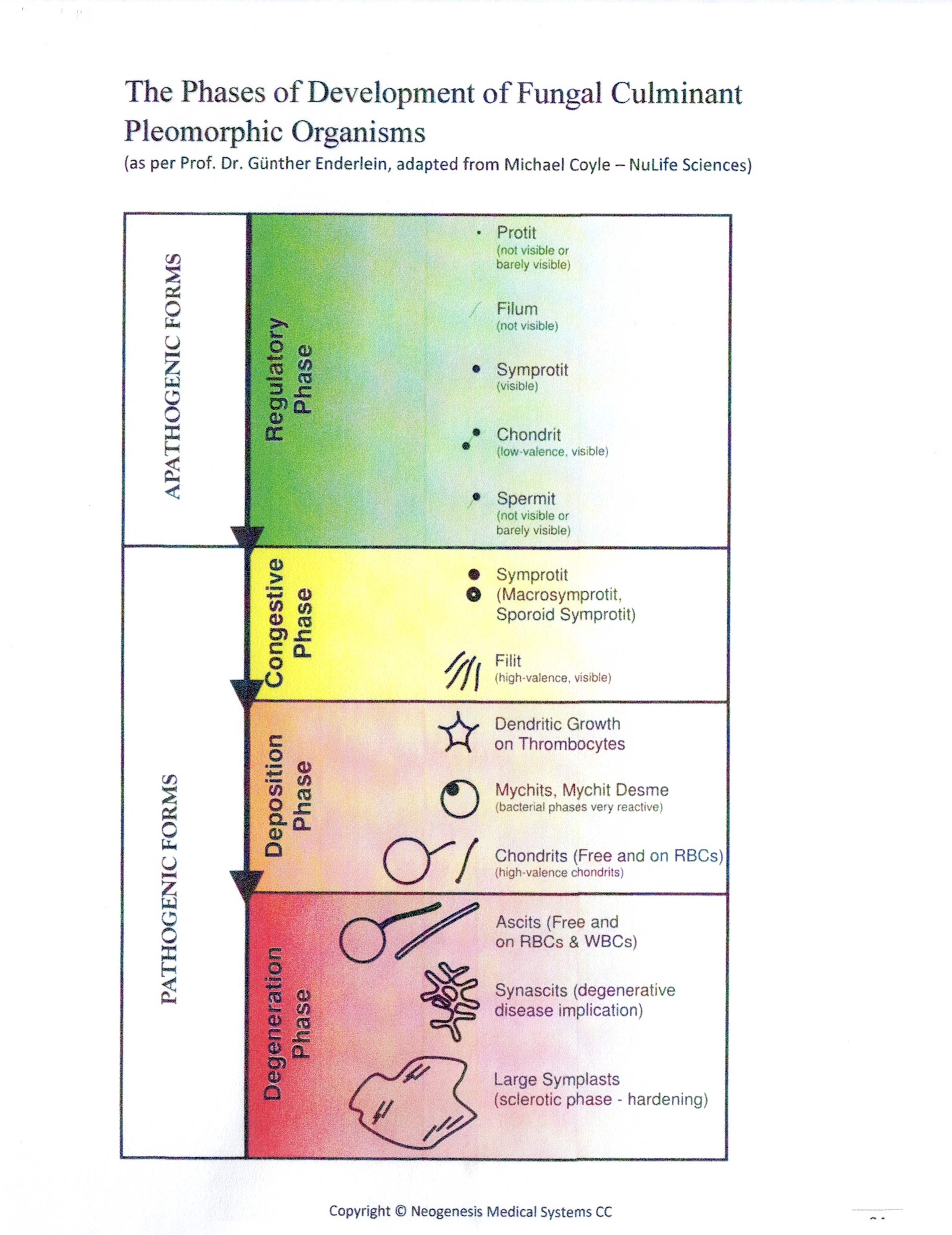
Gunther Enderlein: Found that tiny particles ("protits") in blood can develop into disease-causing forms if the terrain is unhealthy.
Gaston Naessens: Invented the "Somatoscope" to observe living blood and described cycles of change in tiny particles ("somatids").
Why Does Terrain Matter?
The terrain is your body's internal environment, including:
1.Acid/alkaline balance (pH)
2.Electrical charge
3.Level of toxins
4.Nutrition
When the terrain is healthy, microorganisms stay in harmless forms.
When the terrain is unhealthy (acidic, toxic, poor nutrition), microorganisms can change into harmful forms and contribute to disease.